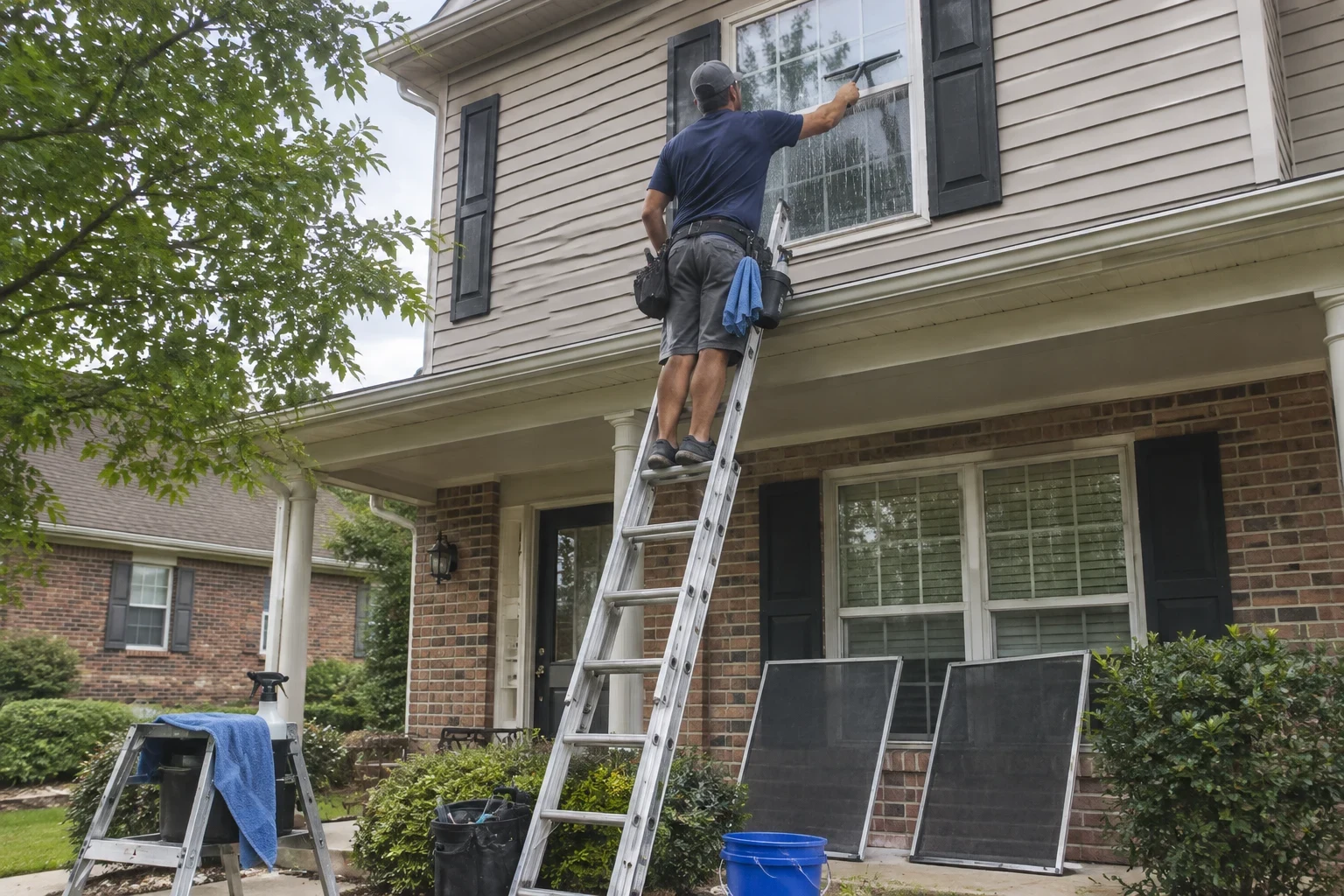
Is It Worth Paying for a Window Cleaner in Ridgeville?
An honest look at what a professional cleaning covers, when doing it yourself is enough, and how to judge the value before you agree to anything.
Is it worth paying for a window cleaner?
For most homes with second-story glass, divided-pane windows or hard water spots, yes, paying a window cleaner is worth it. You get both sides of every pane, plus screens, tracks and sills, done safely and without streaks. For a few easy ground-floor windows, doing it yourself is often fine. Get your quote by phone at (843) 823-1153.
What does a professional cleaning cover that a weekend job usually skips?
Most people wash the glass they can reach and stop there. The parts that make windows look dingy a week later are usually the ones left behind: the screens, the frames and the tracks and sills where dust, pollen and dead insects collect.
A proper exterior window cleaning starts by pulling the screens, rinsing loose grit off the glass and frame, then washing with a strip washer and finishing with a squeegee so the water leaves in one clean pass instead of drying into spots. The edges get detailed with a lint-free cloth, because the gasket line is where streaks hide.
Screens matter more than they look. Fiberglass mesh holds pollen and mildew, and every time it rains that grime washes back onto clean glass. Cleaning the screens and the tracks underneath them is a big part of why a professional job stays spotless longer.
- Both sides of each pane, including upper floors
- Screens removed, washed and reinstalled
- Tracks and sills vacuumed and wiped, with weep holes cleared
- Frames and ledges wiped so dirt does not run back onto the glass
When is doing it yourself good enough?
If you live in a single-story house with a handful of standard double-hung windows, you can do a solid job with a bucket, a quality squeegee and a free Saturday. Tilt-in sashes make the outside of many newer windows reachable from indoors, which removes the ladder from the equation.
The math changes with height and with glass that fights back. Second-story windows mean a ladder on uneven ground, and that is where the real risk in this kind of work sits. French panes and divided lites multiply the edge work, and mineral spots from irrigation overspray will not come off with dish soap. Those are the jobs where paying someone saves real time and risk.
What moves the price of a window cleaning?
Window cleaning is priced by the work involved, not by the size of the house alone. Two homes with the same square footage can look very different once you count the panes and check the access.
We put the scope and these factors in writing before any work starts, so you know exactly which windows, screens and tracks are included and nothing gets added once we are on site.
- How many panes, and what kind: a large picture window is quicker than a grid of small divided lites
- Height and access: second and third stories, steep landscaping, decks or shrubs below the glass
- Condition: hard water spots, paint or stucco overspray, or construction dust that needs extra steps
- Whether interiors, screens and tracks and sills are part of the job
- How long since the last cleaning, since heavy buildup takes longer to remove safely
How often should a home have its windows cleaned?
Twice a year works for most houses. Late spring is the natural first visit, once the yellow pine pollen that coats everything around Ridgeville has finished falling and before summer humidity bakes the film onto the glass. A second visit in the fall clears summer storm splatter and mildew from the screens.
Homes near busy roads, under large trees or with sprinklers that hit the glass may need more frequent visits. Regular cleanings also tend to go faster, because grime has less time to bond to the glass, frames and seals.
Does the same math apply to a small business?
For a storefront or office, clean glass is part of how customers judge the business before they walk in. Fingerprints on the entry door, smudges at child height and a gray film on display windows all read as neglect, even when the inside is spotless.
Commercial window cleaning is usually set on a recurring schedule, often early in the day before customers arrive, so the work does not get in the way of business. The same written scope applies: which doors and panes, how often, and what is included each visit.
More questions about hiring a window cleaner
Something not covered here? (843) 823-1153
Can a professional cleaning scratch my glass?
It can if a razor scraper is dragged across tempered glass with grit underneath, which is why careful cleaners test a small area and rely on soaking and soft tools first. Ask how hard water spots and overspray will be handled before work begins.
Do I need to be home during the cleaning?
For exterior-only work, usually not, as long as gates are unlocked and pets are inside. Interior glass and indoor tracks need someone to let us in.
Should the gutters be cleaned before the windows?
Yes, if both are on the list. Clogged gutters overflow and drip dirty water down the siding and onto the glass, so clearing them first keeps freshly cleaned windows from streaking after the next rain.
Are coated or low-E windows safe to clean?
Yes. The low-E coating normally sits on an inside surface of the sealed unit, so a standard wash with a mild solution and a squeegee does not touch it.
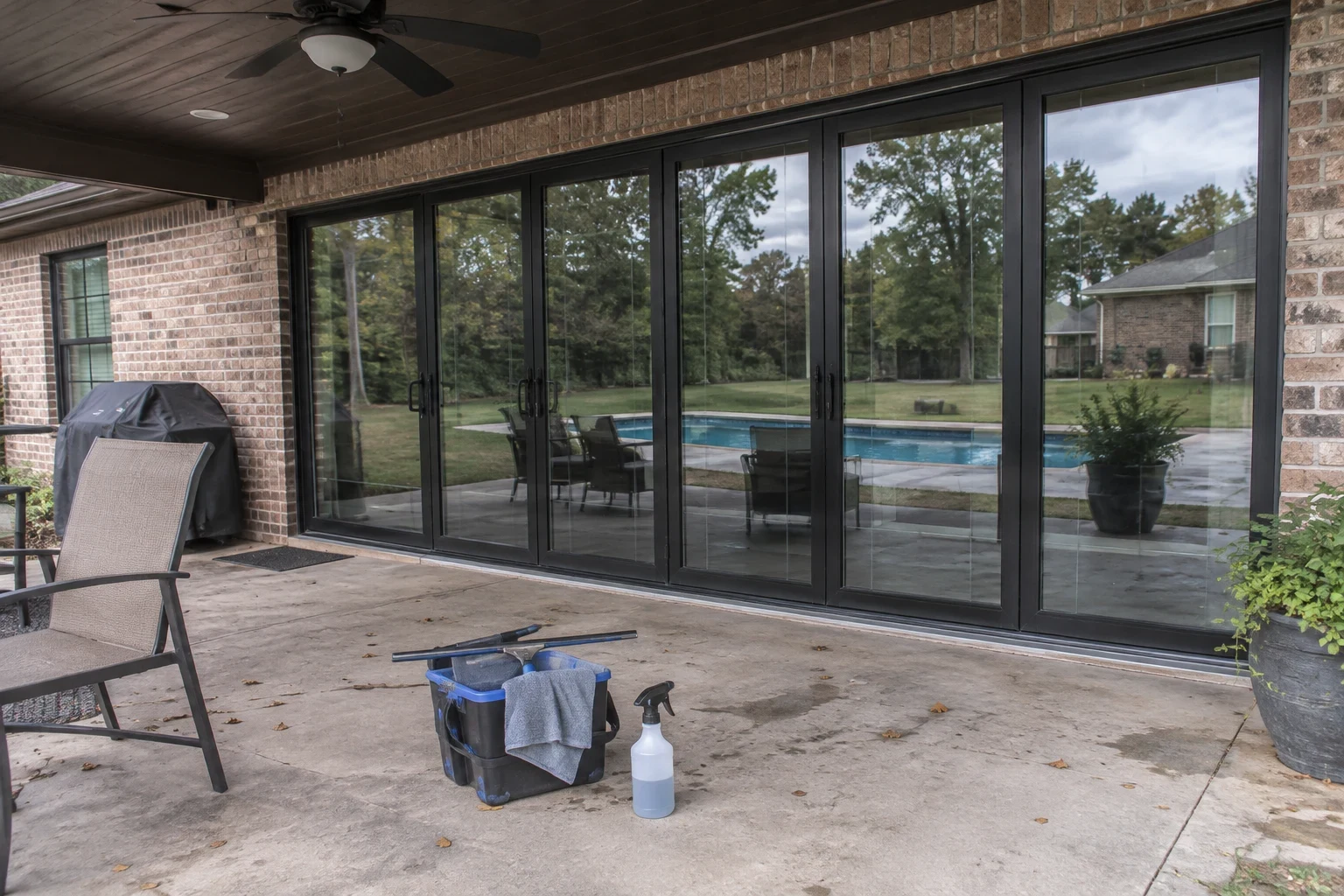
Find out what your windows would take
Tell us how many windows you have, how many stories, and whether you want screens and tracks included. We will walk you through what affects the cost and put the full scope in writing before we start.