ServicesGutter Cleaning
Gutter Cleaning in Ridgeville
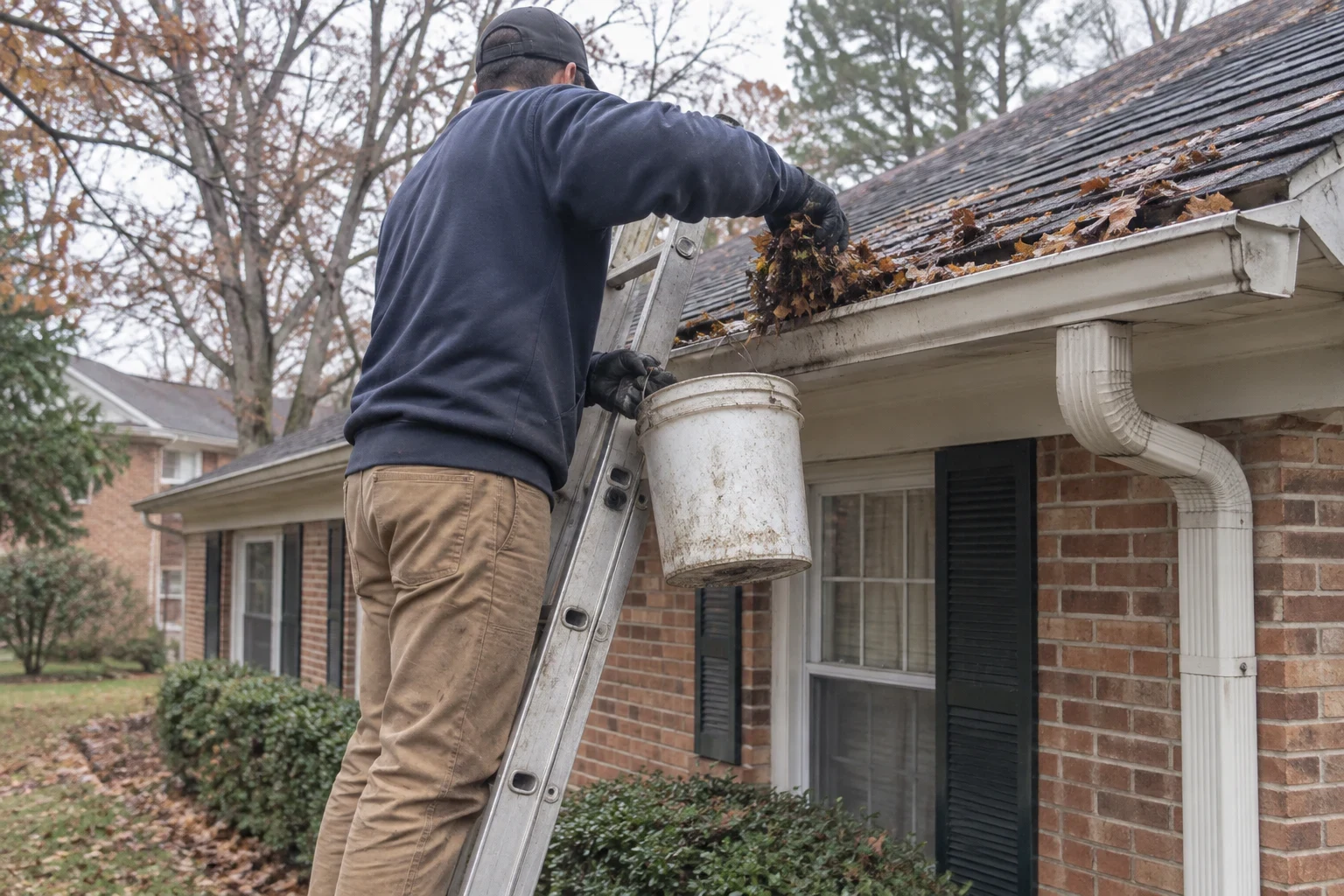
We remove the leaves, pine needles and packed sediment from your gutters, flush every downspout and check that water leaves the house where it should. Before a ladder goes up, you get a written scope listing the runs, the stories and any extra work, so nothing gets added later.
What gutter cleaning actually fixes
A gutter only works if water can travel the full length of the trough and drop freely down the outlet. Most clogs do not start in the middle of a run. They start at the outlet and the first elbow, where needles and oak tassels mat together, catch shingle grit and set up like a sponge. Once that plug forms, the trough fills, overflows at the front lip and dumps water against your fascia, siding and foundation.
Our job is to remove that material by hand, flush the system with water and confirm the flow at the bottom of every downspout. We also look at what the debris was hiding: loose hangers, sagging sections and seams that drip. Around Ridgeville, heavy summer storms and steady pine drop mean a gutter can go from open to overflowing in a single season, so checking flow matters as much as scooping.
Everything we plan to do is written down first. You see which gutter runs are included, whether downspouts are flushed or snaked, and how debris is handled, before we start.
What's included in a gutter cleaning
- 01
Hand-scooping every trough
We scoop leaves, needles, seed pods and wet sediment from each run by hand. Hand work lets us feel for buried hangers and avoid scraping the inside coating of aluminum gutters.
- 02
Outlets and first elbows
We pay extra attention to the drop outlets and the first elbow, where most blockages form. If a plug sits deep in the downspout, we work it loose from the top and the bottom.
- 03
Downspout flush and flow test
After the troughs are empty, we run water through each run and watch it exit at grade. A downspout that drains slowly gets attention until it runs freely or until we can tell you exactly where the restriction sits.
- 04
Roof-edge debris
Needles and leaves piled along the roof edge just above the gutter wash straight back in with the next rain. We sweep that strip off so the gutter stays open longer.
- 05
Debris bagged and hauled
Material comes out of the gutter and into a bag, not onto your flower beds. We rinse splatter off nearby siding and walkways before we leave.
- 06
Condition notes with photos
If we find a pulled hanger, a leaking end cap or a section pitched the wrong way, we photograph it and note it for you. That way you know what you are dealing with instead of guessing from the ground.
Questions about Gutter Cleaning?
Call(843) 823-1153Signs your gutters need cleaning
Water sheeting over the front lip
If rain spills over the edge during a storm instead of running to the downspout, the outlet is likely plugged. Overflow soaks the soil right at the foundation.
Plants growing in the gutter
Grass or seedlings sprouting from the trough mean enough organic matter has broken down to hold moisture and roots. That mat is heavy and holds water against the metal.
Sagging runs or pulled hangers
Wet debris adds real weight. When a section bows or a hanger pulls away from the fascia, the load has often been building for months.
Stains and streaks on siding
Dark vertical streaks below the gutter line usually come from water spilling over the edge, carrying tannins from rotting leaves. They tend to show up first on light-colored siding.
Little or no water from the downspout
A downspout that only trickles during a hard rain is blocked somewhere above. The water is going somewhere, usually over the side.
How the job goes on the day
- 1
Phone conversation and scope
You tell us about the house: number of stories, roof shape, tree cover and any problem spots. We put the scope and the factors behind the price in writing, so you know what is included before we schedule.
- 2
Walk-around and setup
On arrival we walk the perimeter, confirm the runs match the agreed scope and set ladders with stabilizers that rest on the roof, not on the gutter itself. Leaning a ladder against an aluminum trough can kink it.
- 3
Scoop, flush and test
We hand-scoop each run, open up outlets and elbows, then flush and watch every downspout drain. If something falls outside the agreed scope, we stop and tell you before doing anything extra.
- 4
Cleanup and report
We bag the debris, rinse splatter from walls and walks, and go over our notes and photos with you. You get a plain account of how the system drained and anything worth watching.
What moves the price of gutter cleaning
Gutter cleaning is priced on the time and access the job takes, not a flat guess. We list each of these factors in your written quote, so the number you agree to is the number you pay.
- Linear footage and stories
- More gutter means more time. A second or third story needs longer ladders and more careful setup, which adds time on each run.
- Roof pitch and access
- Steep roofs, tight side yards, fences and landscaping beds under the gutter line all affect how we position ladders and how fast we can move.
- Amount and type of debris
- A light layer of dry leaves comes out quickly. Compacted needles and wet sediment that has sat for a year or more takes far longer to remove.
- Gutter guards and downspout blockages
- Guards have to be lifted and reseated to clean underneath, if they are designed to come off. Downspouts with deep or repeated clogs need extra work at the elbows.
Gutter cleaning questions
How often should my gutters be cleaned?
Most houses with a few trees nearby do well with cleaning twice a year, typically after the heaviest leaf and needle drop. Houses under tall pines or oaks may need it more often. We can tell you what we found and suggest a schedule based on how much came out.
Do I need to be home while you work?
No, as long as we can reach every side of the house and any gates are unlocked. We will go over the scope by phone beforehand and share our notes and photos when we finish.
What happens if you find damage?
We photograph it and explain what we saw, such as a loose hanger, a leaking seam or a section that holds standing water. We do not add work to your bill without talking to you first.
Can you clean gutters that have guards on them?
Often, yes. Many guards can be lifted and reseated so we can remove what has sifted underneath. Let us know the type when you describe the house, and we will account for it in your quote.
Can I combine gutter cleaning with window cleaning?
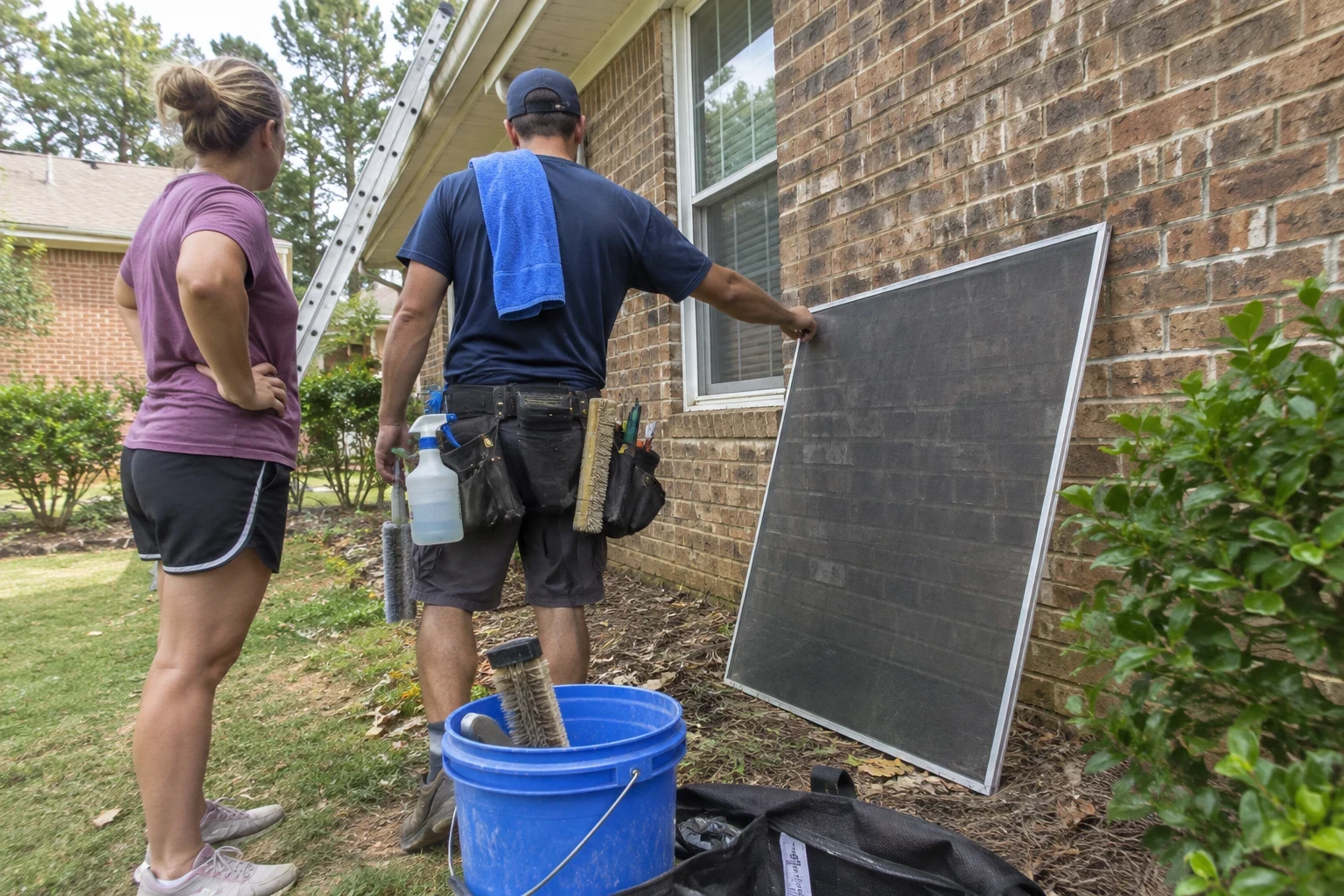
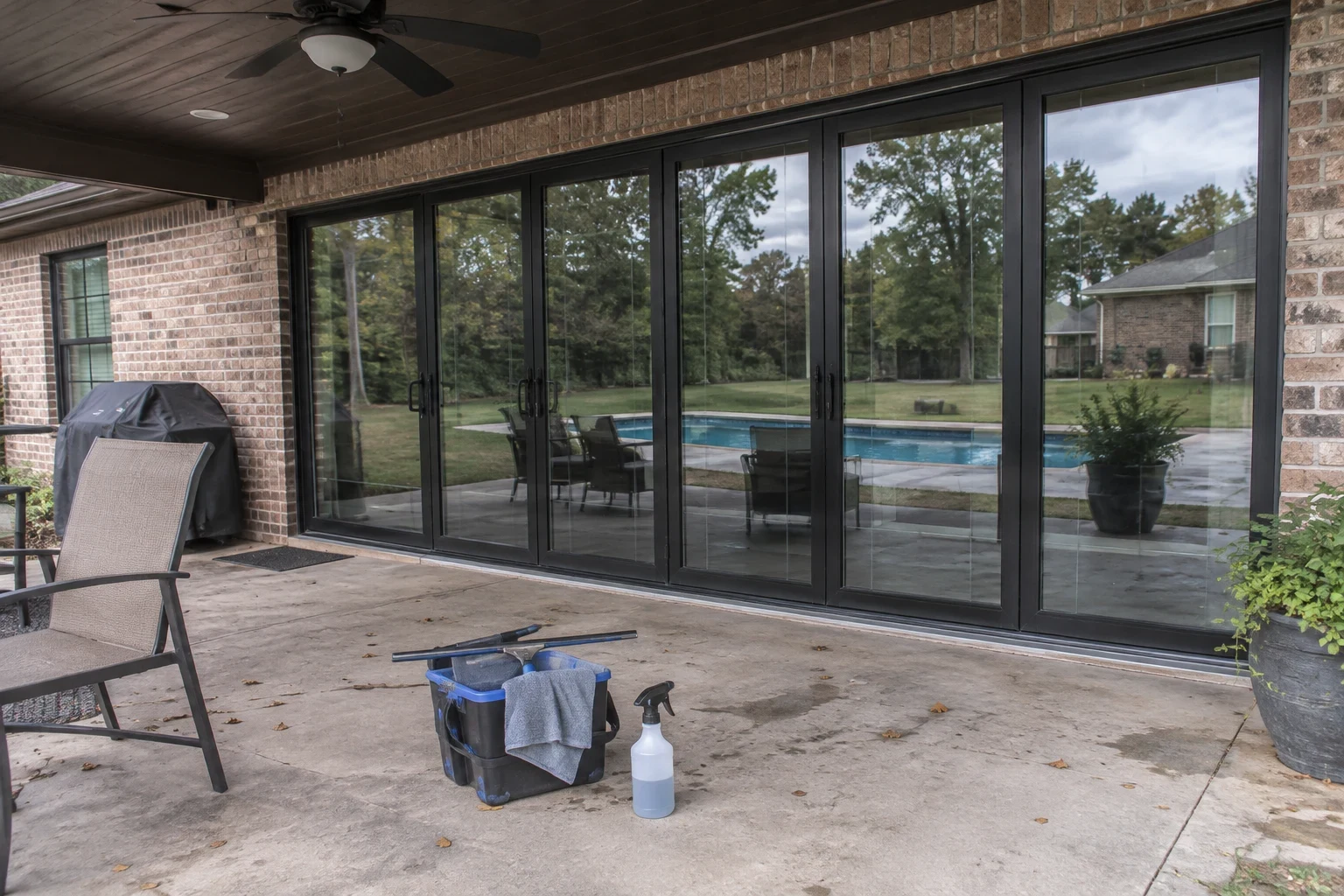
Yes. Many customers book gutter cleaning together with residential window cleaning, since we already have ladders set. Doing the gutters first also keeps splatter from landing on freshly cleaned glass.
Get your gutters draining again
Tell us about your house and trees, and we will put the scope and price factors in writing before any work begins. We serve Ridgeville and nearby towns including Summerville, Ladson and Goose Creek.