ServicesWindow Track and Sill Cleaning
Window Track and Sill Cleaning in Ridgeville
We pull the sand, pollen, insects and mildew out of your window tracks and off your sills, clear the weep holes so rainwater drains outside, and check that every sash moves freely. You get the scope and price factors in writing before we touch a frame.
What Track and Sill Cleaning Fixes
Below the glass sits a track that the sash or slider rides in, and a sill that catches everything that runs down the pane. Both collect sand, pollen, dead insects and the gray film that forms when dust meets condensation. Left alone, that grit wears on rollers, makes sliders drag and plugs the small weep holes that let rainwater escape the frame.
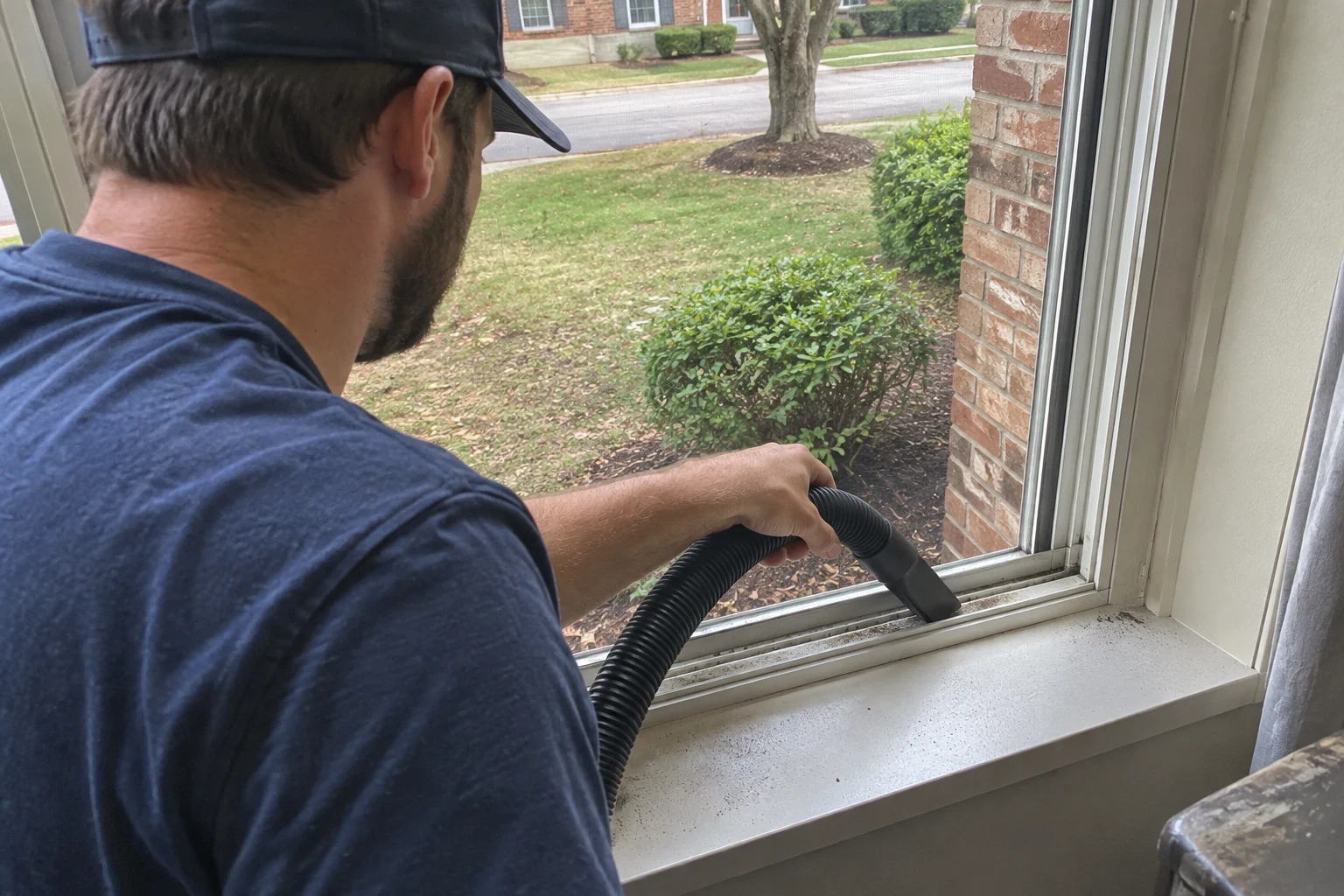
Our track and sill cleaning removes the buildup with vacuums, brushes and low-moisture cleaners matched to the material, whether that is vinyl, aluminum or painted wood. Then we run water through the frame to confirm it drains. Before any of it starts, we write down which windows and doors are included and what affects the price, so nothing gets added on the day.
It pairs well with residential window cleaning. Clean tracks stop dirty water from wicking back up onto freshly cleaned glass.
What the Work Includes
- 01
Dry debris removal first
We vacuum tracks with crevice tools and loosen packed corners with stiff nylon brushes before any water goes in. Wetting loose sand turns it into paste that settles deeper into the channel, so dry work always comes first.
- 02
Mildew and grime on sills
Dark spots in sill corners are usually mildew feeding on trapped moisture and organic dust. We use mild cleaners suited to each surface and skip harsh solvents that can chalk vinyl or lift paint on wood sills.
- 03
Weep hole clearing
Vinyl and aluminum windows have small slots on the outside face of the bottom frame. We probe them clear of spider webs, mud dauber nests and debris, then pour water into the track to watch it drain.
- 04
Sliding door tracks
Patio door tracks take foot traffic and pet hair along with outdoor grit. We clean the rail the rollers ride on and the channel beside it, which is often where a stiff door gets its resistance.
- 05
Final wipe and operation check
Each sill gets a last wipe and each sash gets opened and closed. If something still binds, we tell you why.
Questions about Window Track and Sill Cleaning?
Call(843) 823-1153Signs Your Tracks and Sills Need Attention
Sliders drag or grind
A gritty sound or a window that takes two hands to open usually means debris under the rollers or along the sash guide. Cleaning often brings back smooth travel.
Water sits in the track after rain
Standing water means the weep holes are blocked. Over time it can stain sills and soak into wood framing or drywall below the window.
Black or green spots in the corners
That is mildew growing where moisture and dust collect. It comes back faster the longer it is left in place.
Yellow dust lines every spring
The heavy pine pollen season here settles in tracks and turns to a sticky film once it gets damp. A spring cleaning keeps it from building up layer on layer.
Webs, nests or insect debris
Spiders and wasps like the sheltered gap between screen and sash. Their nests are a common cause of plugged weep holes.
How a Track and Sill Visit Runs
- 1
Scope set by phone and in writing
We ask how many windows you have, their style, and whether sliding doors are included. You get the scope and the factors behind the price in writing before we schedule anything.
- 2
Protect and dry clean
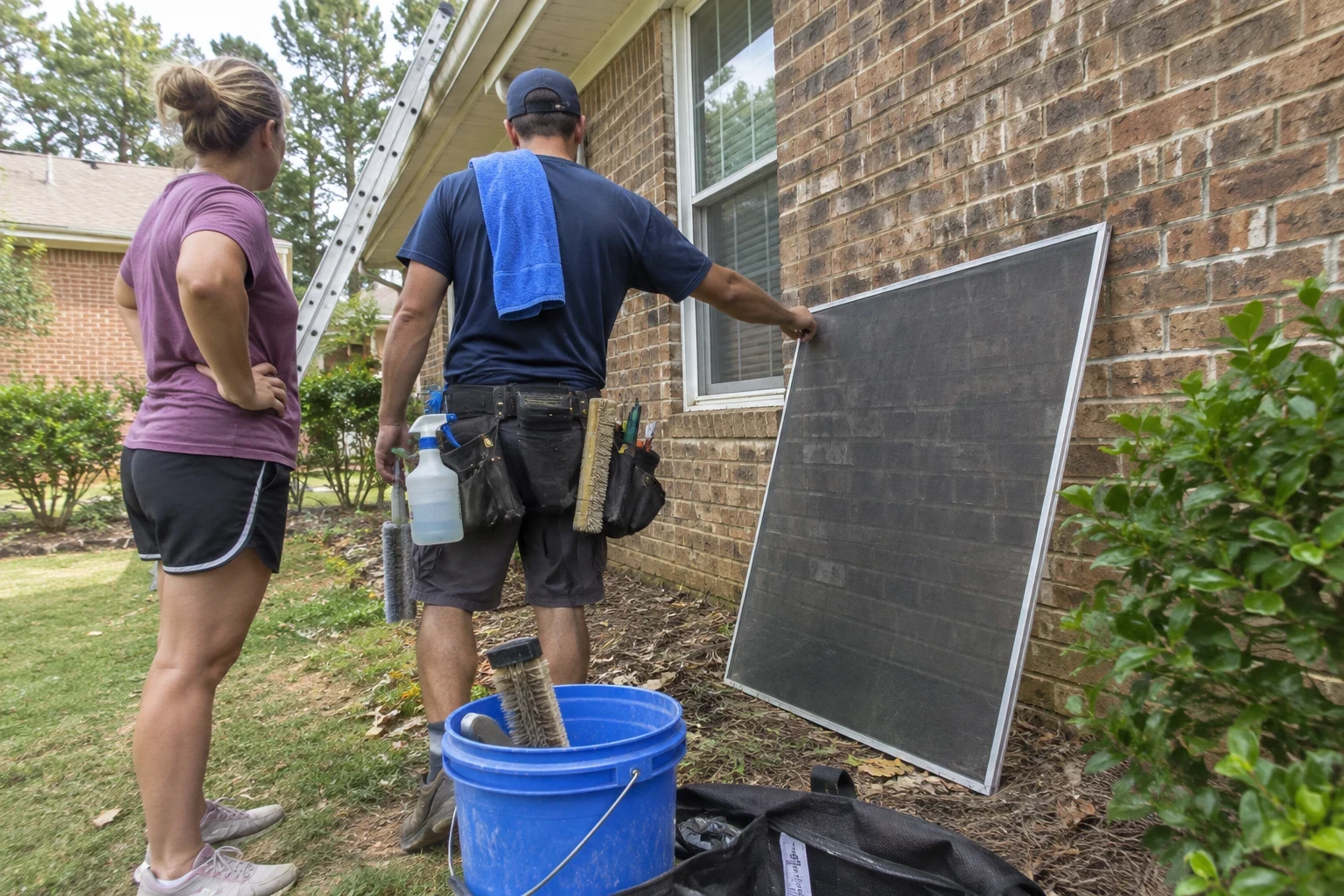
We lay towels under interior sills, remove screens where needed and vacuum every track before using any liquid.
- 3
Detail clean and drain test
Brushes and cloths work the corners and rails, then we clear weep holes and run water through to confirm it exits outside.
- 4
Walkthrough with you
We open windows with you and point out anything we noticed, like a cracked roller or worn weatherstripping. We only describe it; nothing extra happens without your say.
What Moves the Price
Track and sill pricing depends on how many openings we clean and how much has built up inside them. We explain each factor in writing before the work starts. If we find something outside that scope, we ask first instead of adding it to the bill.
- Number and type of openings
- Double-hung, casement and sliding windows each have different track shapes. Sliding doors take longer than a standard window.
- Level of buildup
- A track cleaned last year goes quickly. Years of packed sand, pollen and mildew take more brush work and more passes.
- Access
- Second-story windows, sashes that will not tilt in, and furniture against walls add time.
- Bundling with other work
- Pairing this with window cleaning or window screen cleaning and repair saves setup time, since screens come off once for everything.
Track and Sill Cleaning Questions
Do you have to take my windows out?
Usually not. Most tilt-in double-hung sashes tip inward for access, and many sliders lift out of their track. We never force a sash that resists, because that can crack a balance shoe or bend a frame.
Will cleaning fix a window that sticks?
Often, when the cause is debris under the rollers or along the guides. If a roller is worn or a balance is broken, cleaning will not fix it, and we will tell you so plainly.
How often should tracks and sills be cleaned?
Once or twice a year suits most homes. Late spring after pollen season and fall after summer storms are the two most useful times.
Will water end up on my floors?
We work dry first and use only small amounts of liquid on the inside. Towels go down under interior sills, and the drain test is done so water exits outside.
Should I book this with window cleaning?
It works well together. We clean tracks and sills before the glass so loosened dirt does not run onto clean panes.
Get Your Tracks and Sills Quoted in Writing
Tell us how many windows and doors you have and what you are seeing. We serve Ridgeville, Summerville, Goose Creek and nearby towns, and we put the scope in writing before work begins.